
What Happens When a New Patient Calls a Dental Office After Hours?
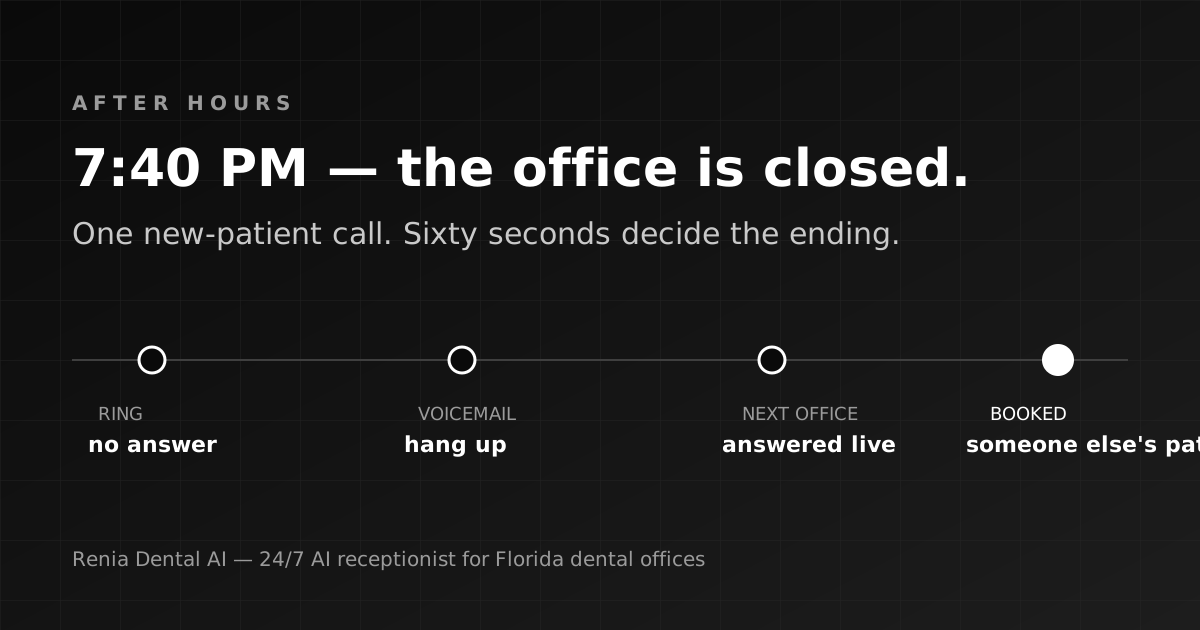
It is 7:40 p.m. on a Tuesday. Someone with a cracked molar spends twenty minutes comparing dental offices on their phone, picks yours, and calls. The office closed at five. What happens in the next sixty seconds decides whether that person becomes your patient — or someone else's.
Most practice owners have never traced this moment call by call. It is worth tracing, because it repeats every evening and every weekend, and the ending is almost always the same.
Minute zero: the phone rings into an empty office
There is no receptionist to answer — that is what "after hours" means. So one of two things happens. Either the call rings out and the caller hears dead air before the disconnect, or a recorded message invites them to leave their name and reason for calling.
Either way, the burden just moved onto the patient. The practice has effectively told a motivated stranger: chase us later, on faith that we call back.
The first thirty seconds: many first-time callers never leave a message
Here is the part that stings. A meaningful share of first-time callers hang up when they reach voicemail instead of leaving a message. The exact percentage varies by market, specialty, and time of day — treat any single figure you see quoted as an estimate — but the pattern shows up in practice call logs again and again. You can test it yourself tonight: compare the rings in your after-hours log against the messages actually sitting in the mailbox.
Why do they hang up? A few reasons come up repeatedly:
- They are comparing options. A new patient usually has three or four offices open in browser tabs. Voicemail is not a dead end; it is a signal to try the next tab.
- Pain does not schedule itself. Someone with a broken tooth wants an answer tonight, not a callback tomorrow between nine and five while they are at work.
- Leaving details feels like a risk. Health-adjacent information on an anonymous machine, with no idea who hears it or when, is something plenty of callers skip.
- The math favors moving on. Dialing the next office takes ten seconds. Waiting for a callback takes a night, minimum.
The next morning, your callback is already late
Say the caller does leave a message and your team calls back first thing. Good effort — but the race ended hours earlier. Between 7:40 last night and 9:00 this morning, that caller reached a practice that answered live: a competitor, a dental group with evening hours, or another local office with an answering service. Whoever answered booked them first.
This is the quiet asymmetry of after-hours coverage. Your best morning-after callback is structurally slower than a competitor's worst live answer. Effort cannot outrun timing.
Where they went instead
In most markets the caller's next step is predictable: back to the search results, down the list, dial the next name. In Florida's metro corridors that list is long — practice density in Miami, Tampa, Orlando, and Jacksonville means the next office is seconds away, and seasonal patient flow keeps demand high outside standard hours. The caller rarely returns to the tab they abandoned.
That is the real cost of an unanswered ring: not one appointment, but the start of a relationship that compounds — hygiene visits, restorative work, family referrals — all accruing to whoever picked up.
How practices capture after-hours calls instead
Closing the gap does not require hiring a night shift. The practical fixes, roughly in order of effort:
- Measure your actual exposure. Pull the call log for after-hours windows and compare rings against messages left. That difference is your leak, quantified with your own numbers instead of someone else's average.
- Make the recording honest. If voicemail stays, say exactly when you will call back and what to do in an urgent case. It will not rescue most new-patient calls, but fewer callers hang up confused.
- Route emergencies deliberately. An on-call rotation only works if callers can actually reach it. Make sure the recorded greeting sends urgent situations somewhere real.
- Answer live around the clock. This is where an AI receptionist changes the outcome. Instead of a recording, every after-hours caller reaches a live voice that greets them, answers questions, offers real openings, and books directly into the practice management system — escalating genuine urgencies according to your rules. Renia works with Dentrix, Eaglesoft, and Open Dental through an outbound-only sync agent that reads your schedule and writes appointments back, so nothing double-books.
Renia Dental AI answers after-hours and weekend calls in English and Spanish, operates under a signed Business Associate Agreement, encrypts call data in transit and at rest, and plays a recording disclosure at the start of every call to meet Florida's two-party consent rule under §934.03. You can read the specifics on the HIPAA and security page. Solo practices start at $399 per month, billed month to month.
Measure your own leak this week
You do not need new software to find out how much after-hours demand you are losing. Pull three numbers from last month's call records:
- Total inbound calls that arrived outside office hours.
- How many of those produced a voicemail message.
- How many of those callers became booked patients.
The gap between the first number and the third is the size of the problem, expressed in your own data. Offices that run this exercise usually find it uncomfortable — and then use it to decide, in one afternoon, whether live after-hours coverage is worth $399 a month. Illustrative estimates from ROI calculators are just that: estimates, not guarantees.
FAQ: after-hours calls, voicemail, and AI receptionists
Should an after-hours caller reach voicemail or a live answer?
A live answer converts far better than a recording. Many first-time callers hang up at voicemail rather than leave a message, and by the next morning they have often booked with another office. If voicemail is your only option, state clearly when you will call back and where urgent cases should go.
Is an AI receptionist HIPAA-safe, and what about Florida's recording law?
A compliant vendor signs a Business Associate Agreement, encrypts call data in transit and at rest, logs access to patient data, and discloses recording at the start of each call to satisfy Florida Statute §934.03 two-party consent. Ask any vendor for those four things in writing before they answer a single call.
Does it work with Dentrix, Eaglesoft, or Open Dental?
Yes. Renia reads the live schedule and writes appointments back through an outbound-only sync agent, so it can offer real openings without double-booking. Those three systems are supported today, with more practice management platforms in progress.
The takeaway
An after-hours new-patient call follows a script: ring, voicemail, hang up, next office. You can rewrite the ending without hiring anyone for nights — measure your exposure, fix the recording, route urgencies, and put something live on the line. The practices that win new patients are not open more hours than everyone else. They answer while everyone else records.
Hear what a live after-hours answer sounds like: book a demo — hear Renia answer in 30 seconds and listen to a sample call in English or Spanish before you decide anything.
Estimates referenced here reflect general industry discussion and each practice's own call logs rather than audited data. Results vary by market, case mix, and staffing.